
Custom Stickers Are the Last Honest Brand Marketing Tool We Have
It's not fair that children get stickers for everything and adults don't. More importantly, it's not fair that brands have abandoned one of the simplest, cheapest, most emotionally effective marketing tools we have.
Stickers are not just kid stuff. They're one of the few remaining analog brand experiences in an exhaustingly digital world—and the data proves they work. According to UPrinting's 2025 market analysis, 72% of businesses report that custom stickers are cost-effective for branding and customer engagement. Yet somehow, brands keep choosing another email campaign nobody opens over a tangible marketing tool people actually want.
Let me make the case for why your brand needs a sticker strategy in 2026.
The Case for Things You Can Touch
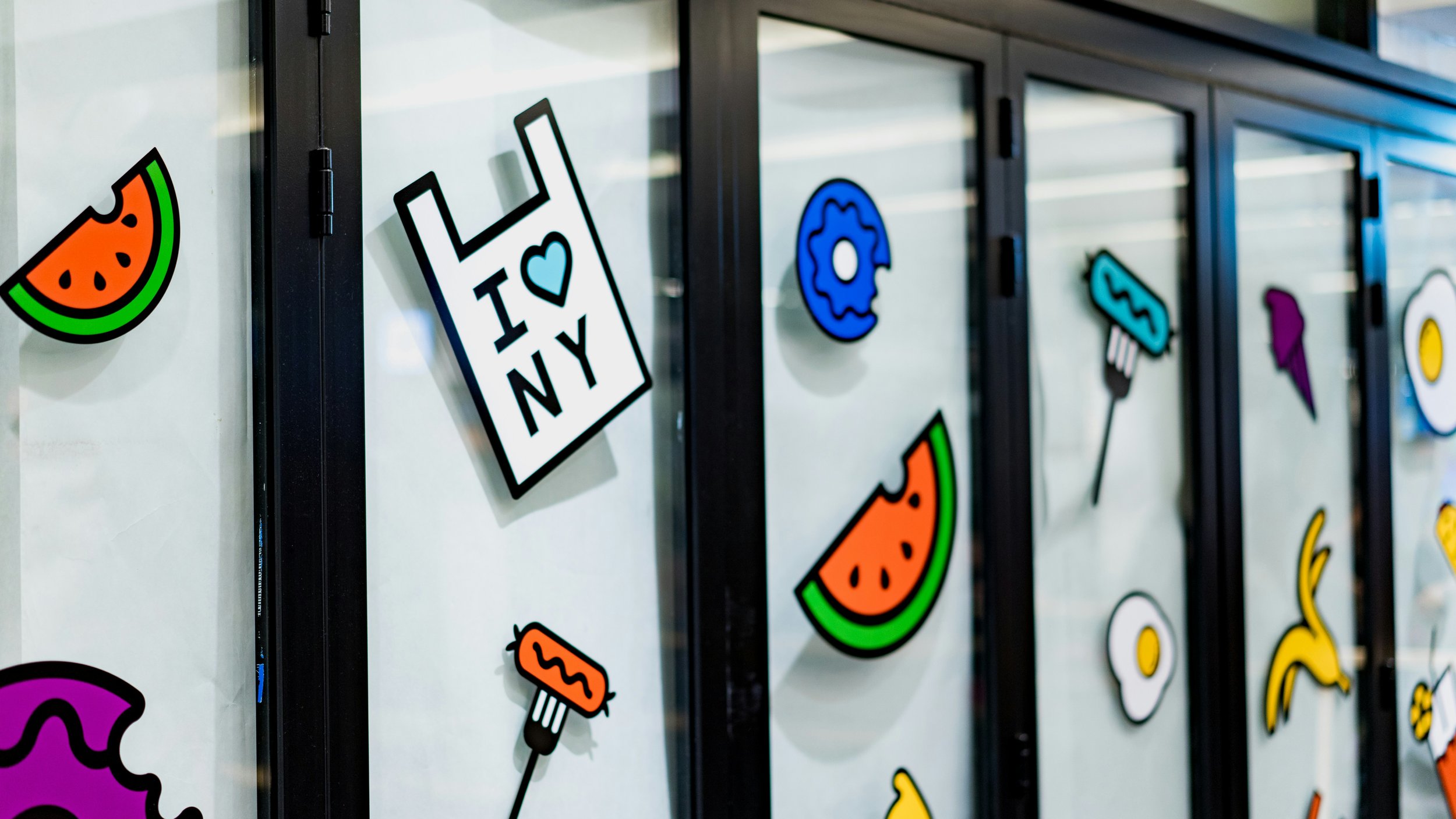
We're drowning in digital noise. People are starving for tangible brand experiences that don't require them to download an app, create an account, or get served targeted ads for the next three months.
Stickers solve this. They're physical. They're personal. They're portable brand ambassadors that people choose to display. And unlike digital marketing that disappears the moment someone scrolls past it, stickers persist. They live on laptops, water bottles, phone cases, notebooks, cars—anywhere someone wants to broadcast their identity.
The Act of Letting Someone Choose Where You Go
Stickers differ from traditional marketing: they require active participation. Someone has to choose where to put your sticker. They have to decide it's worth the real estate on their belongings. They have to commit to your brand being part of their daily visual landscape. That's earned attention.
And in 2026, when 80% of consumers prefer brands that personalize experiences and 92% of marketers believe authenticity is essential, earned attention is the most valuable currency you have.
According to Digital Silk's statistics, 76% of consumers would rather buy from a brand they feel connected to, and 57% are willing to pay more for those brands. Stickers create that connection. When someone puts your sticker on their laptop, they're not just displaying a logo—they're making a statement about who they are and what they value.
Research shows that shoppers are more likely to buy from brands they follow on social media. But social media presence is ephemeral. It disappears when someone closes the app. Stickers remain. They create repeated exposure every time someone opens their laptop or grabs their water bottle.
What Stickers Know That Your CRM Doesn't
We've forgotten how powerful analog experiences are. But they’re so important because they do something that social media typically can’t: they ground us.
Stickers are proof that a moment mattered. They're souvenirs of experiences, badges of belonging, declarations of taste. Unlike digital memories buried in photo libraries, stickers are visible and active. Tangible brand experiences create stronger memory formation and higher customer lifetime value than purely digital interactions.
You snag the hardest reservation in town. You walk out with a sticker of the restaurant's signature dish. Every time you see it, you're transported back to that table. When friends ask about it, you become the brand ambassador.
Or you visit a new city, stay at a boutique hotel, and on the nightstand is a sticker. You take home a sticker of the building. You put it on your journal. Now every time you write, you remember that trip.
It's what Joan Didion meant when she wrote about keeping objects to remind us of who we were. They’re tiny archives of who we were when we loved a place, a brand, a moment.
Loyalty Without the Data Grab
One of stickers' most underutilized applications is as an analog loyalty tool. Brands pour money into apps, points systems, and automation all the time. Stickers offer a simpler path.
For example, you buy a latte and get a sticker from the coffeehouse. If you put it on your travel tumbler and bring it in, you get 15% off your next beverage purchase. No app or tracking needed. Just visible reward and habit formation.
We know small businesses already use stickers for promotions. But they can also be so much more:
Visual loyalty markers
Limited-edition collectibles
Employee-of-the-month features
Product launch announcements
Community-building tools
All without requiring customers to download anything or share data. It is loyalty built on trust instead of surveillance.
When Merch Turns Into Memory Making
Most brands treat stickers as afterthoughts. Logo. Vinyl. Done. That feels like wasted potential to me.

Good sticker design doesn’t feel like marketing. Instead, it should feel more like culture, an inside joke, or a declaration.
Stickers can be:
Micro-storytelling devices
Collaborative art projects
Local pride markers
Seasonal limited editions
Interactive campaigns
Consistent branding increases engagement, which is why stickers help extend branding into physical space. When someone posts their sticker-covered laptop, you get UGC without paying for it.
Why People Are Ready for This Again
Right now, people want more analog experiences. Instead of everything being digital, consumers are looking for ways to connect off-screen.
Stickers fit this shift. They're analog. Personal. Untracked. Simple. People already buy them. Pipsticks (with its popular sticker clubs for adults and creatives) has built a community around tactile joy. Redbubble hosts millions of indie designs that live on laptops and bottles. Etsy remains a haven for handmade, artist-driven stickers. And brands like Papaya Stickers, StickerYou, and Sticker Giant are powering high-quality custom runs for businesses big and small.
UPrinting reports that eco-friendly stickers are the fastest-growing segment, driven by sustainability expectations. Sustainable stickers align with both values and visibility.
The Cheapest Long-Term Brand Play You’ll Ever Make
Email delivers high ROI. PPC delivers moderate ROI. Stickers are harder to track but, let’s do a little math:
Production: $0.10–$0.50 each
Lifespan: Years, not seconds
Earned media: Free UGC
Word of mouth: Trusted recommendations
You can't measure being part of someone's daily visual environment for three years. You just know it matters.
How to Build a Sticky Sticker
When I say bring back stickers as a brand marketing tool, I am not talking just any old sticker…I’m talking declarative, hyper creative stickers with personality.
If your sticker looks like something people would peel off without thinking, you've already lost. The goal isn't "brand visibility." Go deeper and make the goal focused on emotional connection or making a statement. Here are a few ideas:
A limited-edition “I Was Here” sticker tied to an event, launch, or season
A city- or neighborhood-specific design
An artist-collaboration series
A packaging-only “secret” sticker
A values-based manifesto sticker (your brand POV in visual form)
A rotating monthly collectible design
A behind-the-scenes / inside-joke sticker for brand superfans
If you want to make stickers worth keeping:
Work with designers
Create limited editions
Tie them to experiences
Make them beautiful
Then consider distribution. A beautiful sticker in the wrong place might as well not exist.
Distributing strategically looks like including one with orders, offering them for free at checkout, creating gamified sticker-finding experiences, and partnering with other brands.

Stickers live in the long game. So, when it comes to measuring sticker success (you know your CFO will want it), measure creatively by the number of UGC social posts with the design, monitor requests, and use campaign-specific designs.
Consistent branding boosts revenue by 23%. Stickers are one of the cheapest ways to achieve that.
Objections From People Who've Forgotten What Joy Feels Like
I get it, stickers aren’t for everyone. Fine. If you want to neglect your inner child, that’s none of my business. But most of the custom sticker branding pushback comes in arguments like this:
"Stickers are wasteful." So is deleted digital content.
"Nobody wants more stuff." The $7.67B market disagrees.
"We can't track ROI." You can't track most brand equity.
"It's not scalable." Neither is real connection.
"Stickers are for kids." Adults buy them, too.
Need evidence that stickers work? Walk into any coffee shop and count the sticker-covered laptops.
The Sticker Comeback We Need
The global sticker market is projected to hit $7.67 billion by 2033, and 72% of businesses report measurable ROI from something that costs less than fifty cents to produce. So, why not lean into one of the oldest, simplest marketing tools we have?
As people continue to feel bogged down by this AI-heavy, algorithm-driven era we’re in, stickers are a solid antidote. Human-scale. Unfiltered. Tangible.
Sometimes the best strategy is the simplest: give people something they’ll actually keep.
Give us stickers. Give us joy. Give us connection without permission from an algorithm.