
So Yesterday: Hilary Duff Is the Antidote for Millennial Nostalgia
Looking to get drunk on millennial nostalgia? Interested in daydreaming about the versions of you that were left somewhere back in 2008? May I suggest Hilary Duff’s new album, luck… or something.
Millennial nostalgia is having a full cultural moment right now—you can feel it everywhere. Lily Allen is making new music. People are rewatching Gilmore Girls and Gossip Girl in droves. Delia’s-era fashion, the low-rise cargos, the butterfly clips, the going-out tops that were never meant to survive, have returned from the dead and landed in every fast-fashion storefront in America. At first glance, it can look like ironic consumption. It isn’t. But right now, millennials aren’t laughing at the past…we’re reaching for it.
And lucky us, our patron saint of millennial girlhood, Hilary, who is now 38, has returned in the nick of time.
The Millennial Brochure on Adulthood Lied To Us
The millennial generation (anyone born between 1981 and 1996, putting us roughly between 30 and 45 today) grew up straddling two completely different worlds. We were the last generation raised in an analog childhood and the first to come of age online. We had both. We remember the before and the after. Landlines, then cell phones. MapQuest printouts, then GPS. Going outside until the streetlights came on, and then suddenly being findable, always.
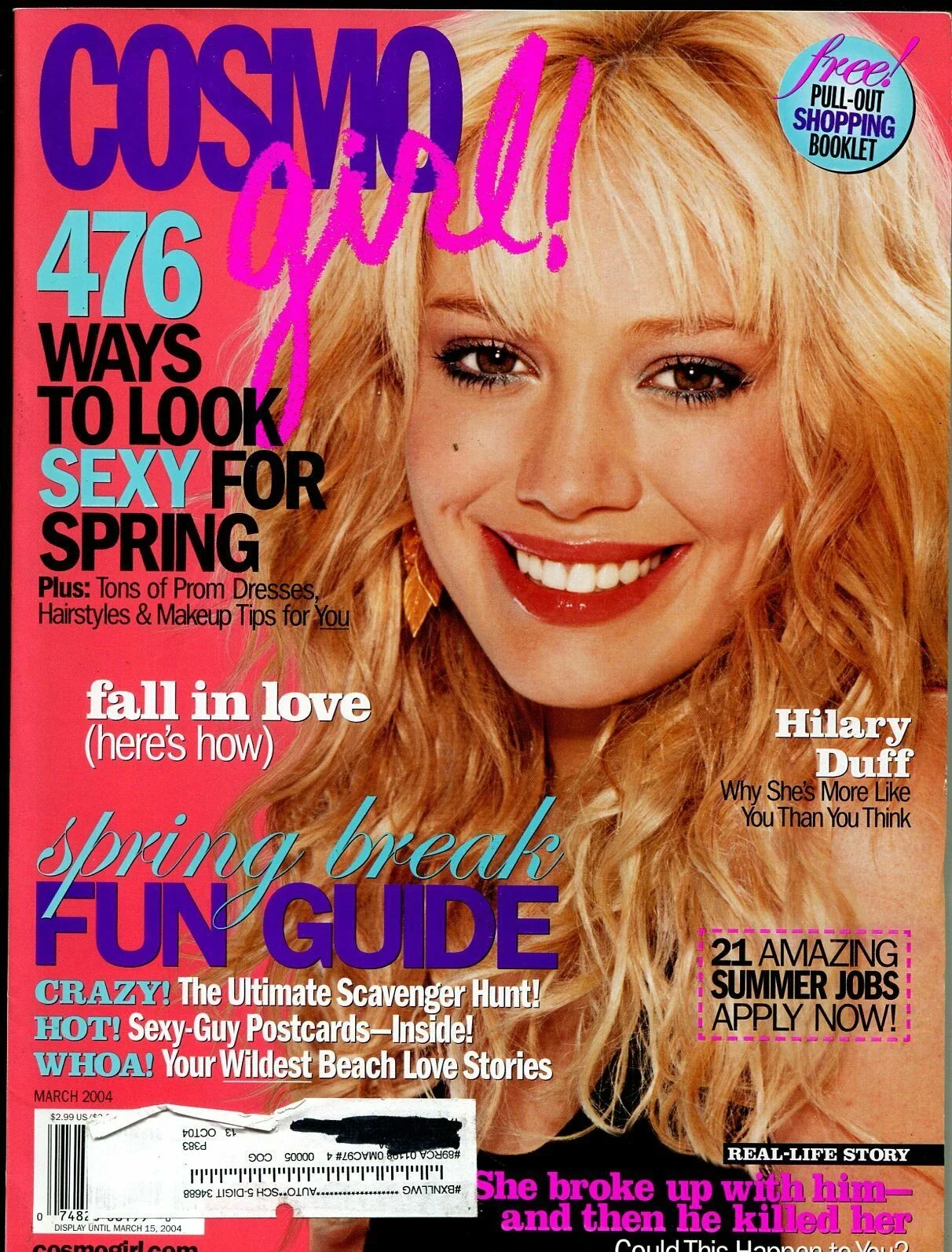
We were raised on Disney Channel optimism and MTV’s Total Request Live. We dog-eared CosmoGirl and religiously tuned into Dawson’s Creek. We were told, explicitly and repeatedly, that if we worked hard, stayed positive, and played by the rules, we’d get the life we pictured. The American Dream that our parents wished they had.
And then, on a Tuesday morning in September 2001, we watched the Twin Towers fall, live in classrooms. The world cracked open. What followed was a decade of war, the 2008 recession, a housing market that laughed in our faces, a pandemic, and now a job market where stability feels mythical. Layoffs are the norm, arriving via calendar invite labeled “department updates.” Careers require constant self-reinvention to tread water.
Millennials are now the most stressed and burnt-out generation on the planet, at least according to Gallup. We’re old enough to feel nostalgic and young enough to still feel cheated. We’re managing careers while mourning versions of ourselves that never fully got to exist. We’re confronting the reality that the life we were sold doesn’t actually exist, and doing our best to make peace with that.
This is the emotional soil where millennial nostalgia grows.
Millennial Nostalgia: Trend or Lifeline?
Millennial nostalgia isn’t new, but right now, it’s hitting a fever pitch.
When the present feels unstable, the past starts to feel safer. Not because it was perfect, it wasn’t. But because it felt navigable. If we’re being honest, looking at 2026 versus 2006, things were a little better then. Or at least, they still felt possible. The early 2000s were the last time many of us believed the future was something we could plan for, not just endure.
There’s been a lot of talk about 2016 as a cultural touchstone, with “2026 is the new 2016” flooding social feeds. But as millennial influencer Helen McPherson put it, “The year we should be idealizing is 2006: the millennial peak.” Gen Z might be nostalgic for 2016, but millennials are reaching further back to 2006, 2004, 2002: the years when we were still unformed and the internet and social media did not drive our entire lives.
And culture is following us there. Mean Girls became a Broadway musical and then a musical movie. Paris Hilton and Nicole Richie rebooted The Simple Life. Streaming platforms are resurrecting every IP from 2003 and betting we’ll pay for it again, and of course, we are. Bedroom pop and indie sleaze are back in the algorithm.
And now Hilary, one of the defining figures of early 2000s nostalgia, has released new music that doesn’t pretend that era never happened. She embraces millennial nostalgia without irony. And it works.
But Why Hilary Duff, Specifically?
I had dinner with a Gen Z friend last weekend, and she asked what the hype around Hilary was. I asked my cousin, a junior in college, the same question. She said she’d never heard of her. That makes perfect sense. And the reason also has nothing to do with vocal range or technical skill.
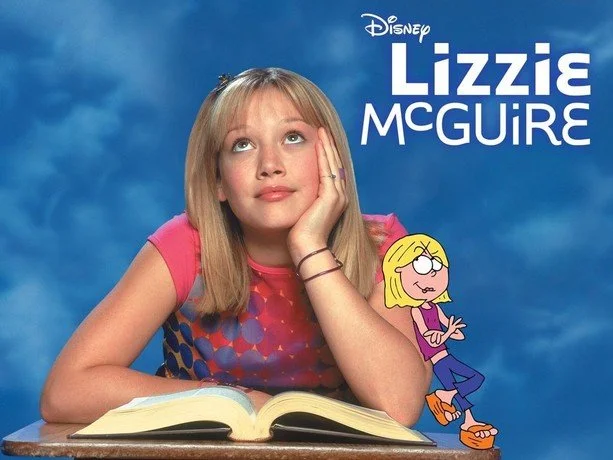
Do most millennials care about Hilary as a musician in the abstract? No. We care because she grew up alongside us. We watched her on Disney Channel as Lizzie McGuire. We heard “Come Clean” every single time Laguna Beach aired. Her music was the soundtrack to our most awkward, hopeful, unformed years.

And while so many of her peers (Britney Spears, Lindsay Lohan, Amanda Bynes, Mischa Barton) spiraled publicly, disappeared, or became cautionary tales, Hilary stayed intact. She married, had a son, divorced, remarried, and had three more children. She starred in Younger from 2015 to 2021. Then, she showed up on How I Met Your Father (a reboot of the beloved millennial show, How I Met Your Mother). Hilary gave us no public implosion, and no scorched-earth reinvention. Instead, she has existed and grown at roughly the same pace we did.
When she decided to release new music, she could have rebranded entirely. She could have distanced herself from the early 2000s and delivered a sleek, sanitized version of adulthood engineered for TikTok virality. She didn’t.
Before her new album even dropped, Hilary went on a small-stage tour and played the songs that shaped our adolescence: “So Yesterday,” “Why Not?,” “Wake Up,” “What Dreams Are Made Of,” “With Love,” and “Fly.” No ironic distance. Just singing these early aughts bops with her whole chest.
“With Love,” in particular, comes with its own layer of millennial lore. It’s the song that became a meme—the slightly underpowered choreography, the soft commitment—earning her the affectionate internet refrain: “Go girl, give us nothing.” Instead of bristling at it, Hilary pokes fun right back. She lets the joke breathe. She performs the song anyway, fully aware of how we remember it, and lets that memory live alongside her now.
She didn’t have to play any of those songs. She didn’t have to acknowledge the joke. She didn’t have to do any of it. And that choice, staying with the past instead of pretending it never happened, spoke volumes before any of us ever pressed play on the new album.
The Sound of Making Peace With the Past
luck… or something isn’t a collection of maximalist bops or power ballads. That was never really her lane. What it offers instead is a mastery of acceptance: of the past, the present, and the unglamorous work of holding both at once.
She gets personal in ways we haven’t seen her before. “The Optimist” turns toward her father, “I was an emotional architect who knew your dimensions more than you/ I learned which way you turned your back/To let go of eye contact and which bottles made you feel most immune/ I wish I could sleep on planes/ And that my father would really love me/ I wouldn't have to feel such shame.”
She also sings about what she told CBS Morning’s Anthony Mason is “the loneliest part of her life,” the estrangement from her sister, Haylie: “I'm not sure when it happened/ Not even sure what it was about,” on the track, “We Don’t Talk.” She sings, “We come from the same home and the same blood/ A different combination but the same lock.”
On “Holiday Party” and “Future Tripping,” she sits with the insecurities that can creep into even stable relationships, singing lyrics like “In my head you live another life where you fuck all my friends and wish someone else could've been your wife” and “I’m worried about shit that hasn’t happened/ Entertaining every doubt.”
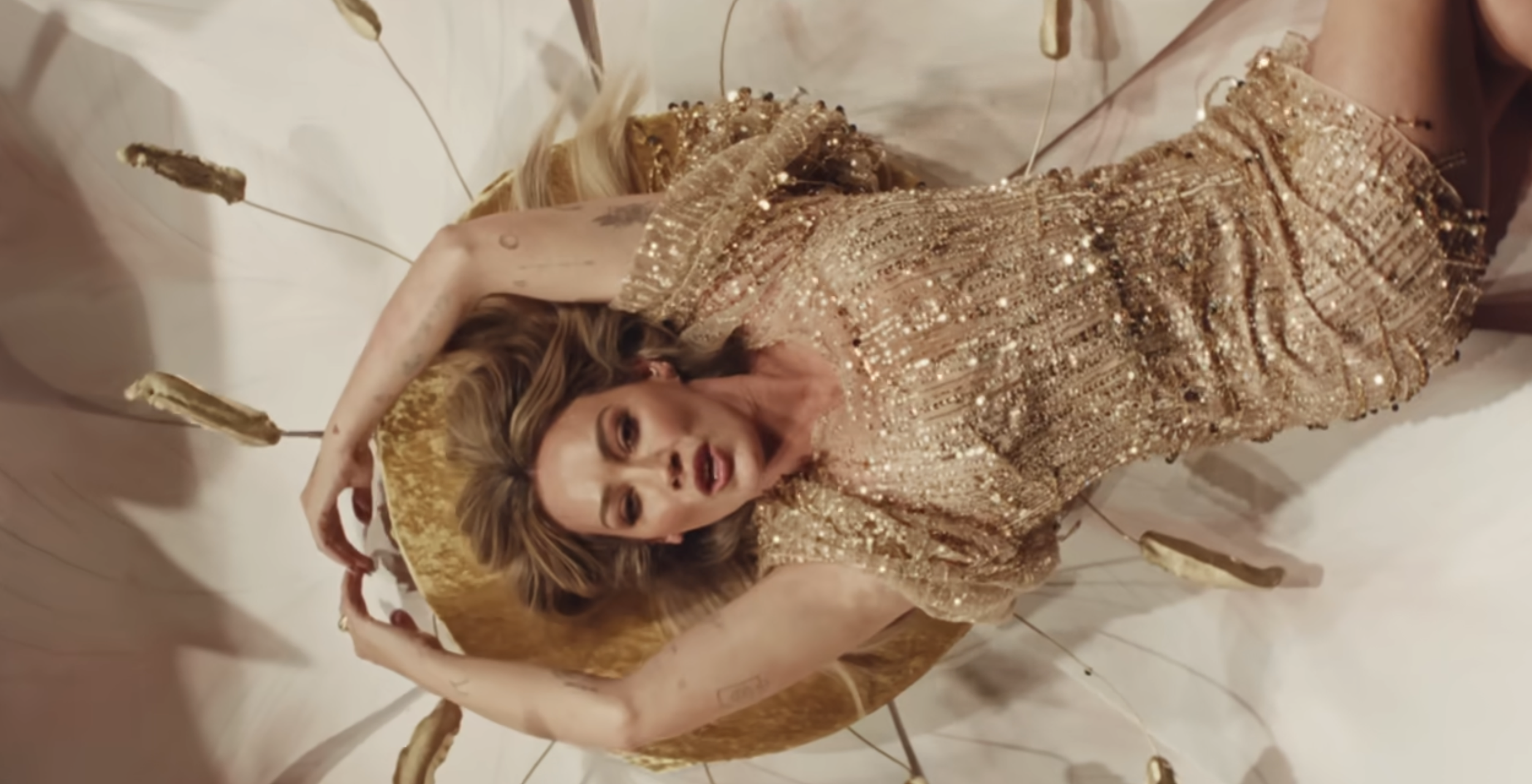
At one point on the album in the track, “You, From the Honeymoon,” she sings about a past relationship, allowing the life she lived then and the life she has now to coexist on the same record: “At 23 in Rockaway Beach/ Too young to be too existential/ Your kinda freak matched my kinda freak/ Our chaos had so much potential.”
The lead single, “Mature,” is the most talked-about track, and maybe the most satisfying. It’s about a man who does what he does best: chooses someone far younger than him. She sings about a man who needs someone who “doesn’t know enough to know what she don’t know.” Whether or not it’s about Leonardo DiCaprio, as the internet has been busy speculating, the dynamic is so familiar it barely needs explaining: “She looks like all of your girls but blonder/ A little like me, just younger/ Bet she loves when she hears you say/ ‘You’re so mature for your age, babe’.”
She earns the millennial nostalgia on “Growing Up,” sampling Blink-182’s 1997 sog, “Dammit,” and borrowing the lyric my sister and I used to scream with the windows down in my 1989 red Toyota Corolla: “And when everybody's gone/ They got busy and moved on/ We’ll face it on our own/ And I guess this is growing up.”
Hilary closes the album with “Adult Size Medium,” a reckoning with who we were versus who we are now. Cherry-flavored ChapStick. Grayish highlights. “Nobody runs faster than time/ It's heartbreaking and reassuring,” Hlary sings about the shock of realizing adulthood arrived without ceremony and came with no manual to help us navigate. It hits softly, then all at once, especially if you’ve ever daydreamed about who you were before 401Ks, OKRs, and KPIs replaced conversations about what you actually wanted your life to look like.
This record integrates every version she’s been, while doing something incredibly well: holding up a mirror to where so many millennials are now. And for that, we’re grateful.
Was Any of It Worth It After All?
A lot of brands and artists have moved on from the ancient millennial texts. They’ve pivoted to Gen Z. They’ve chased whatever algorithmic moment felt most urgent.
Hilary hasn’t.
Her decision to honor who she was then and who she is now fits where many millennials find themselves today: reclaiming childhood, grieving the lives we thought we’d live, and still trying to figure out what comes next.
“The 20-year-old me is still in here,” she sings. “I remember everything and nothing at all. Was any of it worth it after all?”
That’s the question a lot of us are still holding, just now with LinkedIn profiles, tech neck, and the understanding that the world we were promised doesn’t exist.
At its best, millennial nostalgia doesn’t just look backward. It holds both the then and the now at once: the grief and the perspective, the person you were and the person you’re still becoming.
Hilary’s album is doing exactly that, and that’s exactly what we needed her to do.